


Author Amro Shubair reveals why the fate of a country’s reputation is sealed by consular staff, not its presidential rhetoric.
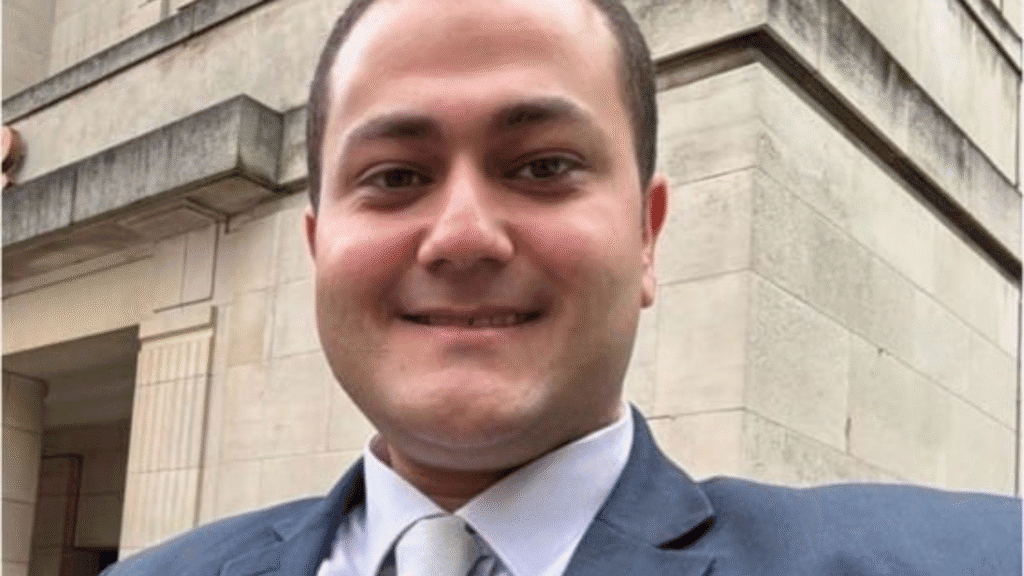
By Brian Ochieng Akoko, Reporter | Nakuru City – Kenya.
- Author Amro Shubair reveals why the fate of a country’s reputation is sealed by consular staff, not its presidential rhetoric.
- Why a Perfect Performance Means Nothing Without Follow-Through
- The Danger of Inauthentic Messaging
- Why One Failed Moment Undoes a Hundred Good Claims
- The „First Story“ of a Nation
- Why Functional Basics are More Persuasive Than Drama
- Enforcing Ethics with Data and Consistency
- How Data Turns Performance into Proof
- Highlighting the Structure That Keeps Everything Working
- Focus on Being Reliable, Not Impressive
- The Necessity of a Ground-Up Policy Review
The world of diplomacy often feels distant and dramatic. It is dominated by high-stakes treaties, televised summits, and the grand rhetoric of leaders on podiums.
These spectacles capture the headlines, but according to leading author and public policy expert, Amro Shubair, they are mere frosting on a cake built from far humbler ingredients.
Shubair, the author of „Diplomacy in Practice,“ argues that the true measure of a nation’s influence—its strategic storytelling—is not found in clever messaging or glossy campaigns.
Instead, it is rooted in the quiet, consistent, and deeply human acts of institutional practice. In an exclusive interview for REUC Digital Magazine, Shubair laid bare the core thesis of his work: that the long-term credibility of any nation is decided at the service desk, not the negotiating table.
Why a Perfect Performance Means Nothing Without Follow-Through
Shubair suggests that the global media’s focus on spectacle creates a misleading picture of success. Speeches and signed agreements certainly draw attention, but their impact is ephemeral if the underlying system is fragile.
„Speeches might draw attention. Treaties might make front pages,“ Shubair explained via email. „But none of it lasts if the system beneath is weak. A perfect performance means nothing without follow-through.“
When a crisis hits, or when international pressure mounts, it is the underlying strength of institutions—the capacity for steady, functional delivery—that determines survival and reputation.
People, he asserts, remember results, not just appearances. The essential difference, therefore, lies in action versus announcement. Spectacle is loud and instantaneous, aimed at an immediate public relations win.
Practice is quiet and repetitive. Real diplomacy, Shubair insists, is defined by „how institutions behave when nobody is watching.“ This „quiet, repetitive work“ is the foundation that holds people’s trust across borders.
The system’s baseline behavior must show up „again and again, same tone, same fairness, same clarity.“ That, he concludes, is where reputation truly lives.
The Danger of Inauthentic Messaging
The current global information ecosystem is a maelstrom of „constant noise.“ It is saturated with competing, often conflicting, narratives.
In this environment, every state, corporation, and movement battles for influence and attention. How can any single narrative achieve durability when falsehoods can spread instantly?
Shubair is clear: the path to influence relies entirely on matching message with reality. The louder the environment gets, the easier it becomes for the public to spot the inauthentic.
„Anyone can build a message. Anyone can say something polished,“ he noted. „But if it doesn’t match how things are actually done on the ground, the message burns out fast.“
In the 21st century, citizens are far more empowered to check the facts against their personal experience. They are not waiting for official confirmation. Strategic storytelling, in this context, is not about clever slogans or spin.
It works only when it reflects reality, not when it attempts to hide from it. „If a process works with dignity, if a reply is actually respectful, if something is delivered clearly and fairly, then the story is already there,“ Shubair stated. „You don’t need spin. You just need truth felt in real form.“
Why One Failed Moment Undoes a Hundred Good Claims

The gap between grand official communication and poor practical action is what Shubair terms the „Credibility Gap.“ Its consequences are severe and swift.
A nation can invest years and millions into positive global messaging. It can promote its culture, its economic success, and its technological prowess. Yet, that entire edifice of goodwill can crumble with one single, dismissive interaction.
„You lose people’s trust the moment they catch you off balance,“ Shubair cautioned. The public does not measure trust based on the volume of press statements. They measure it based on their own, often high-pressure, personal experiences.
They remember how they were treated when the stakes were high, when they were vulnerable, or when they needed help. „One failed moment can take down a hundred good claims.“
The public offers institutions a short window to prove themselves. They don’t need a second opinion; they live it once and that is enough for them to form a lasting judgment. Crucially, this warning works both ways.
A single, fair, calm, and consistent interaction can be a long-term asset. When a person feels respected during a moment of distress, that single act of care—not a campaign—becomes the country’s story.
The „First Story“ of a Nation

For many citizens, particularly those living abroad, the consular desk is their most intimate, direct, and unforgettable experience with a foreign policy apparatus. This makes consular practice the nation’s „First Story.“
Shubair provided a powerful, relatable example to illustrate this point. Imagine a citizen who has lost their passport the night before a critical flight home. They are panicked, exhausted, and „already assuming the worst“ as they approach the embassy.
What happens next instantly defines the nation’s narrative for that person. If they are met with order, with a person who listens without interruption, and a clear solution offered fast—without stress or judgment—that becomes their story.
„They don’t remember the desk or the plaque,“ Shubair explained. „They remember how someone handled their fear without judgment.“ This singular moment of „human steadiness“ instantly forms the nation’s reputation among that citizen’s community back home.
The embassy did not advertise this moment; it was not rehearsed. „The care becomes the message,“ he concluded. This is the critical distinction between a narrative that is merely declared and one that is authentically earned.
Why Functional Basics are More Persuasive Than Drama
Beyond the consular office, the power of steady practice extends to routine professional and economic exchanges. These elements, often viewed as mundane or bureaucratic, are the silent engine of strategic influence.
Headlines about trade deals quickly fade, but partnerships that continue to work, year after year, speak volumes. A system that reliably moves goods across borders, with minimal friction, communicates more trust than any one-off political announcement.
A scholarship program that stays open for ten years, supporting multiple cohorts of students, tells a powerful story of belief and enduring structure. These quiet processes prove something rare and valuable: stability.
„You can’t fake long-term reliability,“ Shubair said. When people on both sides of an economic or professional exchange feel the process working smoothly, they begin to trust not just the transaction, but the entire institution and nation behind it. This function, not drama, is what makes continuity persuasive.
Enforcing Ethics with Data and Consistency

Trust is also cemented through institutional continuity. Shubair defines this simply: „When people get the same answer no matter who responds, that’s continuity.“
If standards shift with every change in leadership or personnel, the public stops trusting the office and starts trying to „guess the mood.“ But when a high standard of service and fairness is maintained, citizens „relax into the system.“
This consistency is reinforced by the proper utilization of data. Data, in this context, is not a replacement for human judgment or ethics, but a crucial tool for transparency and proof. „Data turns performance into proof,“ Shubair stated.
Instead of merely claiming to be responsive, a state can show its average reply times. Instead of claiming transparency, it can show how decisions are tracked and counted.
Data, therefore, „enforces“ ethics by moving the conversation from mere opinion to concrete evidence. It is a vital step in making diplomacy truly „real.“
How Data Turns Performance into Proof
At the core of all credible action lies ethics. Shubair argues that „Ethics turns storytelling from a technique into a practice of responsibility.“
Ethical storytelling is not about crafting a pleasant tone. It is fundamentally about the choice to tell the truth, even when silence or deflection would be easier. It means actively refusing to oversimplify complex facts or to provoke conflict unnecessarily.
Crucially, ethical storytelling requires „keeping the dignity of others in view,“ especially those who are marginalized or who are not present to speak for themselves. This choice is responsibility, not strategy.
A state that tells its story ethically demonstrates that its ultimate purpose is not control over others, but care and mutual respect. „Ethical storytelling doesn’t flatten facts or soften impact. It sharpens respect,“ he said.
„And in diplomacy, that is more powerful than persuasion. It protects everyone involved.“ This protection is what eventually matures into the trust that the global community is willing to extend back to the nation.
Highlighting the Structure That Keeps Everything Working
Shubair’s insights pose a direct challenge to modern journalism. If the strongest stories are the ones „experienced“ and real diplomacy „lives off camera,“ then reporters must shift their focus.
Journalists often default to covering sensational political conflicts and high-profile diplomatic summits. When they focus only on these „surface events,“ they entirely miss the core „structure that kept everything working.“
Shubair urged news organizations, including REUC Digital Magazine, to begin highlighting these „quiet practices.“ This means reporting on staff training, consular readiness procedures, long-term procedural reforms, and cultural programming.
These are not „soft stories,“ but the essential functions that make the system operational. By bringing these unseen foundations to light, journalism can deepen the public’s understanding that diplomacy is not just a reaction to events; „It is a profession.“
Focus on Being Reliable, Not Impressive
When asked for a single piece of advice for the next generation of diplomatic service officers, Shubair distilled his entire philosophy into one human-centric skill: reliability.
„Focus on being reliable, not impressive. Try to be consistent,“ he advised. Trust is not built by a flash of brilliance or a dramatic maneuver. It is built by „A calm voice. A clear reply. A fair action repeated a hundred times without drama.“
The great narrative of a nation begins small. „If one person feels seen, then the next, then the next, that’s the story,“ he concluded. „Not the speech. The desk. That’s where it starts. It begins at the desk. And when that desk delivers, everything else follows.“
The Necessity of a Ground-Up Policy Review
As a journalist based in Nakuru City, Kenya, far from the polished halls of Geneva or New York, the perspective offered by Amro Shubair resonates with profound local impact.
The idea that national credibility hinges on the micro-interactions—the moments people are at their most vulnerable—is not just an academic theory; it is a critical news value.
The concept of „Credibility Gap“ is something felt acutely in contexts where trust in large institutions is often low. My research into this topic confirms the practical necessity of Shubair’s view.
For instance, in developing economies, the difficulty a small business owner faces in navigating complex, inconsistent trade documentation often outweighs the perceived benefit of a bilateral trade announcement.
The pain point is in the practice, not the spectacle. Furthermore, I believe Shubair’s analysis offers a vital new lens for African foreign policy. For many emerging nations, competing with global powers on spectacle (like large military displays or enormous one-off investments) is impossible.
However, competing on consistency and care—building highly ethical, transparent, and responsive institutions—is entirely achievable. A diplomatic mission that treats all citizens and partners with uniform dignity, regardless of geopolitical weight, creates a moral authority far more valuable than temporary political leverage.
In my view, every foreign affairs ministry, from Nakuru to capitals across the globe, must undertake a ground-up review. They must measure their success not by the size of their latest photo-op, but by the average wait time for a visa, the clarity of their public-facing data, and the consistency of care delivered by their most junior staff.
If the foundation of trust is truly at the desk, then the entire focus of strategic public diplomacy must be brought down to earth. We must start treating our bureaucratic processes as the most important narrative tools we possess. This is where the real story of global influence is being written.

Daj svoj stav!
Još nema komentara. Napiši prvi.