


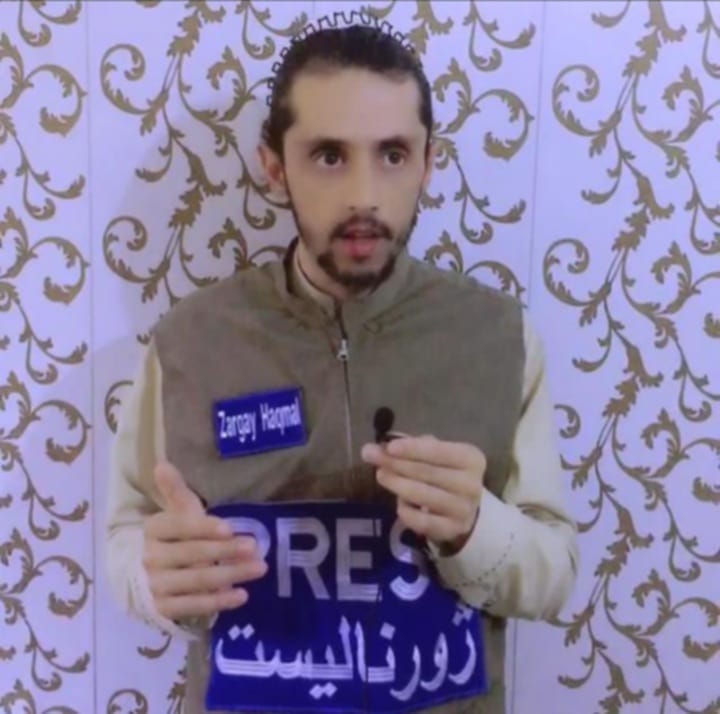
former Director of Broadcasting at Tajala Radio –
Afganistan
They said, “Ask one of your male colleagues to make the call.” Beyond this, women journalists face harassment and insults because of their clothing, or what the Taliban call “immodesty,” making access to official sources and information extremely difficult.
A few months ago, while preparing a report and recording video with my phone in the field, I was stopped by two Taliban members. They spoke to me with humiliating and threatening words, saying, “You spies of the infidels and the West are everywhere; your life will not be easy.” They took me to the nearest security office, and after about two hours of detention, they released me only after obtaining a written commitment from my father. This incident had a deep psychological impact on me, and the fear and pressure prevented me from continuing field reporting. Journalism, which once brought me excitement and freedom, had turned into a nightmare filled with threats and suppression.
Women journalists who have long been the voice of the people, especially women, now face a harsh and dark reality under Taliban rule. Media work, once a tool for freedom, justice, and awareness, has turned into a force for silence under fear, threats, and censorship. Here, I want to share the untold stories of some women who were on the frontlines of reporting yesterday but today have either retreated into a sorrowful silence, been forced to leave the country, or remain confined in their homes, away from the profession and identity they once fought for.
Fatima (pseudonym), a journalist in Kabul, says: “After the Taliban returned, I lost my job, was unable to continue my studies, and my dreams were destroyed. Later, I began working as a reporter for a media outlet, but being a journalist in the current situation is more than just a challenge; every day I face threats, censorship, and discrimination. Several times, I was taken to security offices and threatened by senior Taliban officials.”
She adds: “Once, they told me that if I went to the media center again, my name would be removed from the list of journalists, or if I spoke with the media about a certain issue, neither I nor my family would be safe. This was the biggest threat I experienced and made me decide never to speak with any local or international media again. Every time I was humiliated or taken to the security office, I considered quitting this job, but economic problems prevented me. This situation has destroyed my mental peace, and I often suffer from severe headaches and depression. My greatest fear is that one day media opportunities will be closed to girls, and I will lose my last chance to work.”
Maryam (pseudonym), a journalist in the western zone, says: “I start every day with threats and end it in fear. Journalism has now become humiliating and unsafe. I have repeatedly experienced censorship. Topics I want to cover are not only forbidden from publication but even writing them is not allowed. For the simplest information, I have often been turned away. Taliban officials often do not speak to female journalists, and women are not allowed to enter official offices. Access to news sources for women has become almost impossible.”
She adds: “Once, I contacted a Taliban official to verify statistics. After a while, he contacted me and proposed friendship, changing the tone of his messages. I was scared and never told my media manager, fearing it could create problems for me and leave me unemployed and depressed like thousands of other girls. I only tried to cut off communication with that person. Alongside severe censorship and the silencing of women’s voices in the media, we female journalists face daily fear and pressure, not only from the Taliban but also from the social environment.”
Tamana (pseudonym), a journalist in Kabul, says: “With the Taliban’s return to power, my career path completely changed. First, I lost my job, then joined a media outlet for a small salary, but now I am unemployed again. During this time, threats and censorship were always part of my work. Once, I spoke on a program about women’s issues and was threatened by the Taliban. We were warned not to cover this topic again; otherwise, we would face harsh consequences. Extensive censorship occurs in the media, and content contrary to Taliban policies, especially regarding women, is not allowed to be published.”
Tamana adds: “The reports I wrote were often censored or deleted. I was repeatedly threatened and told I had no right to be a journalist. Over time, these threats and pressures from both society and the Taliban—especially humiliating behavior and censorship—made it impossible for me to continue. Gradually, I lost motivation, felt unsafe, and ultimately had to resign. For me, this was not the end of a job but the end of a part of my identity and dreams.”
Samira (pseudonym), a journalist in exile, says: “After the Taliban returned to power, I lost my voice and dreams, became unemployed, and had no opportunity to work in media for a while. When I returned to work, the world of journalism had completely changed. My reports and news were censored, sometimes entirely removed from the broadcast list. The Taliban imposed their demands on us and did not allow us to tell the truth. They silenced our voices and shut our mouths.”
She emphasizes: “It felt like a lump in my throat. When I became a media manager, the pressure intensified, and I had to account for the activities of all my colleagues. Sometimes, for minor issues, Taliban intelligence or the Ministry of Information and Culture would call and warn me not to repeat them. But this was not enough; the warnings became personal and threats more serious. The Taliban threatened me several times and entered my office. Ultimately, I had to leave the profession I had passionately fought for, then leave my country, and now I have no hope of returning to a Taliban-controlled country.”
These women journalists, though marginalized, have not surrendered. Some teach in secret, others write remotely for international media, and some still search for a glimmer of light in the darkness.
Meanwhile, the Afghanistan Journalists Center reported that in the first six months of 2025, violations of media freedom increased by 56 percent, with 140 recorded cases including the detention of journalists, closure of media outlets, and restrictions on women journalists. Additionally, 80 percent of Afghan women journalists were forced to leave their jobs. According to the Media Support Organization, women journalists make up over 350 of the total 4,500 media employees across the country.
Mohammad Omar Mukhlis, a former Taliban commander in Paktia province, admitted during his farewell gathering that the group had intended to kill journalists, though most of them managed to leave the country. Sources on September 8, 2025, reported that this Taliban commander, considered a member of the Haqqani network, was appointed as head of the Third Security District in Kabul city following his dismissal by Hibatullah Akhundzada, the Taliban Supreme Leader.
Speaking at his farewell gathering in Paktia, the commander said: “We would have killed all the journalists. They were not journalists; they were traitors. We would have killed them and pursued them, but they survived, escaped, and reached their masters.”
This comes as the Taliban have repeatedly arrested and imprisoned journalists who operated even under the group’s own policies. Sources also report that his dismissal caused severe tensions between Hibatullah Akhundzada and Sirajuddin Haqqani. Initially, the commander refused Hibatullah’s order, but with Sirajuddin Haqqani’s mediation and the promise of a higher-ranking post, he ultimately accepted the decision.
Despite declaring a general amnesty, the Taliban have killed, tortured, or imprisoned hundreds of former regime employees and have also tortured, arrested, and threatened dozens of journalists.
Daj svoj stav!
Još nema komentara. Napiši prvi.