


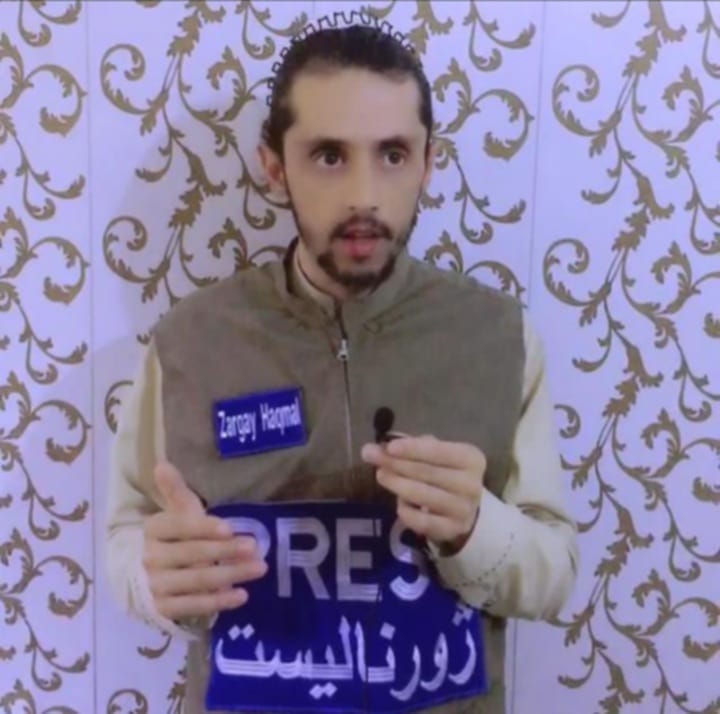
former Director of Broadcasting at Tajala Radio –
Afganistan
Four years have passed since the Taliban returned to power in Afghanistan, and women have been systematically pushed out of education, work, and society. As a result, they are facing unprecedented poverty and despair. Among the hardest hit are women who have lost their family breadwinners. To survive, they are forced into painful and sometimes humiliating decisions. One of those decisions is selling their hair — not as a symbol of beauty or fashion, but as a grim reflection of today’s Afghan reality.
In Kabul, some women say the absence of jobs, the Taliban’s ban on women working, and their role as household heads have left them with no choice but to sell their hair in order to cover basic needs. These women are urging aid organizations to continue supporting Afghanistan and to prioritize female-headed households.
Sahar, a Kabul resident, once enjoyed cutting her hair short for style. Today, her hair has become an income source for her family. She explains that after the Taliban’s takeover, as the head of a five-member household, she had no other option: “We are very poor. My father passed away, and now it’s just me, my mother, and three sisters. One day, I heard a boy shouting in the street that he was buying hair. I went outside and asked the price. Then I cut my hair — and my three sisters’ as well — just so we could buy bread and not go hungry.”
Nilab, another young woman, tells a similar story. Severe economic pressure forced her to sell her hair to support her family. She says many people judged her harshly and even distanced themselves, but the money went toward food, medicine, and her family’s basic survival. “The insults, the fear, and the shame were part of it. I always felt as if I had lost a piece of myself,” she said with a heavy voice.
Masouda, another Kabul resident, says women in her neighborhood are doing the same. “The only reason women sell their hair is economic pressure. We see it every day. Many do it just to pay rent or medical bills. For many women, it’s their only source of income.”
Sohail, who has witnessed women selling their hair in his community, admits that at first he was upset and disapproved of it. But after learning that a neighbor had no other means of survival, his perspective changed: “At first I was shocked, but when I realized it was because of poverty and helplessness, I understood the harsh reality of our lives.”
Women’s rights activists say that hair-selling in Afghanistan is a sign of deep poverty and a direct consequence of stripping women and girls of their fundamental rights. Journalist and women’s rights activist Azita Nazimi explains: “Since the Taliban came to power, women’s economic and social lives have been destroyed. With beauty salons closed, schools and workplaces banned, women have been pushed into poverty. Selling their hair has become a survival strategy, but it also shows how far Afghan women have been deprived of dignity and rights.”
Sahar Tajik, a member of the Free Thought Foundation, warns that selling hair is only the beginning. “What we see today is not a choice but a symbol of poverty and despair. Hair is part of a woman’s body and beauty. When she is forced to sell it just to survive, it’s a clear violation of human dignity. If this continues, women may be forced one day to sell organs such as kidneys.”
Over the past four years, the Taliban’s gender-based policies have systematically excluded women from the labor market, while offering no economic support. In this environment, hair has become a survival commodity, turning women’s very bodies into a means of survival.
Alongside street buyers, some beauty salons purchase hair depending on its length, color, and the seller’s age — paying between 500 and 4,000 Afghanis.
This comes as UN Women has declared that four years into Taliban rule, Afghan women and girls continue to face systematic violations of their rights and dignity. The International Organization for Migration has also warned that Afghanistan’s economy is on the brink of collapse, with at least 70% of the population unemployed and living below the poverty line.
Daj svoj stav!
Još nema komentara. Napiši prvi.