

Ksh 270 Million Modernization Faces Critical Public Health Deficit in Nakuru East
By Brian Ochieng Akoko, Reporter | Nakuru City – Kenya.
Nakuru City is aggressively pursuing its new city status. It uses high-visibility capital projects. But an investigation into the Bondeni neighborhood reveals a stark duality.
A major commercial investment stands in sharp contrast to a foundational public health crisis. This crisis is caused by failed service delivery.
The Flagship Project: A Triumph

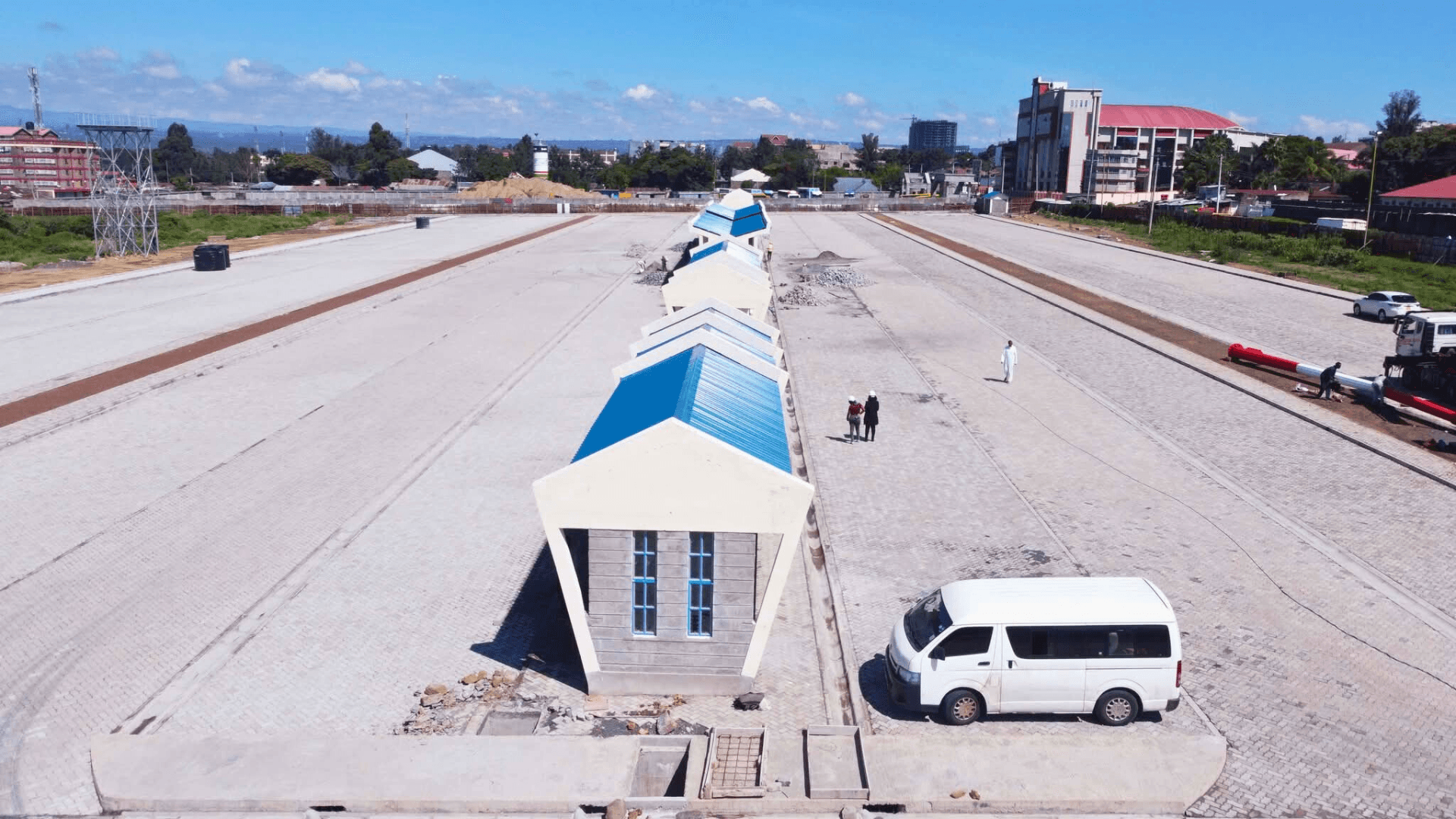
The centerpiece of urban renewal is in Nakuru East. It is the almost complete construction of a Sh270 million ultra-modern bus park. It also includes a five-storey market complex in Bondeni.
This major investment is jointly funded by the National and County Governments. It is expected to be operational soon. This „Big Bang“ development is a visible validation of the city’s new status.
The park can accommodate over 300 vehicles. This will significantly decongest the Central Business District (CBD). The facility incorporates modern infrastructure:
- Advanced sanitation facilities.
- An elevated water tower.
- A powerhouse and transformer.
- Comprehensive street lighting and waste collection points.
The market complex will host hundreds of traders. It will alleviate the severe lack of selling space for an estimated 3,000 traders.
The project demonstrates high fiscal accountability. The county scored 79/100 in the 2024 County Budget Transparency Survey (CBTS).
The Shadow of the Sanitation Deficit
Despite the massive capital investment, Bondeni is in crisis. It is a high-density, low-income area. It, along with Kivumbini, Lake View, and Kaptembwa, is mired in chronic infrastructure failure.
The fundamental problem is a complete lack of sewerage connectivity. These informal settlements are not connected to the city’s over 60-year-old main sewer line.
This public health failure transforms into a severe, regressive private tax on the city’s poorest. Families must rely on private sanitation solutions. They hire exhausters to empty their septic tanks.
The cost is immense: between Sh2,000 and Sh3,000 per trip. This disproportionate economic burden is imposed on low-income households. They pay a premium for a basic public service.
Chronic Flooding: Health Hazards

The lack of basic infrastructure extends to drainage. Bondeni experiences chronic flooding. Heavy rainfall leads to severe health hazards. Nakuru City Management and City Manager Gitau Thabanja conducted on-site inspections.
They confirmed severe drainage issues. Technical officers identified blocked drainage channels. This intensifies the risk of disease outbreak during rain. The ground view reveals a jarring contradiction.
The city boasts high-standard bitumen road upgrades elsewhere. Yet, the primary access roads in Bondeni are often rudimentary dirt paths. Piles of rock and aggregate are visible.
This confirms localized infrastructure work is underway, likely for drainage trenches. Proactive work is ongoing, but it is rudimentary. It lags severely behind the major, visible capital projects. This gap highlights the massive deficit in foundational service delivery.
The Hidden Cost of Inequality
The Bondeni Paradox illustrates a tension between urban aspirations and social equity. The Sh270 million Bus Park is essential for urban aesthetics. However, the lack of basic sanitation shows a critical Development Tier Gap.
This infrastructure failure creates a chronic public health risk. It subjects low-income residents to unnecessary financial stress. The annual private expense for waste removal consumes a substantial portion of a low-income family’s budget.
This cost is completely eliminated in connected areas. Nakuru County has high financial ambition. It targets a revenue projection of Ksh 20.707 billion for the Fiscal Year 2025/2026. This financial capacity and high fiscal transparency are tools for attracting partners like the World Bank.
The Path to Sustainable Equity
Nakuru City must realize its full city status. It must attract sustainable, long-term investment. Its fiscal ambition must immediately translate into accelerated equity in service delivery.
The current model prioritizes commercial and aesthetic gains over foundational public health. The future success of the comprehensive Sh5.6 billion water and sewerage system upgrade is crucial.
This project is the city’s best hope. It can correct this fundamental development inequity. It will connect informal settlements. It will lift the regressive private tax from its poorest citizens.
Until that upgrade is operational, the modern Bus Park will stand as a potent symbol. It is a sophisticated commercial anchor built atop a foundation of dirt roads and raw sewage. It defines the deep divide in Nakuru’s development frontier.
The true measure of the city’s success will be in the ground-level equity achieved. It is not just the high-rise buildings constructed. The lives and health of thousands of Bondeni residents depend on this critical shift in priority.

Daj svoj stav!
Još nema komentara. Napiši prvi.